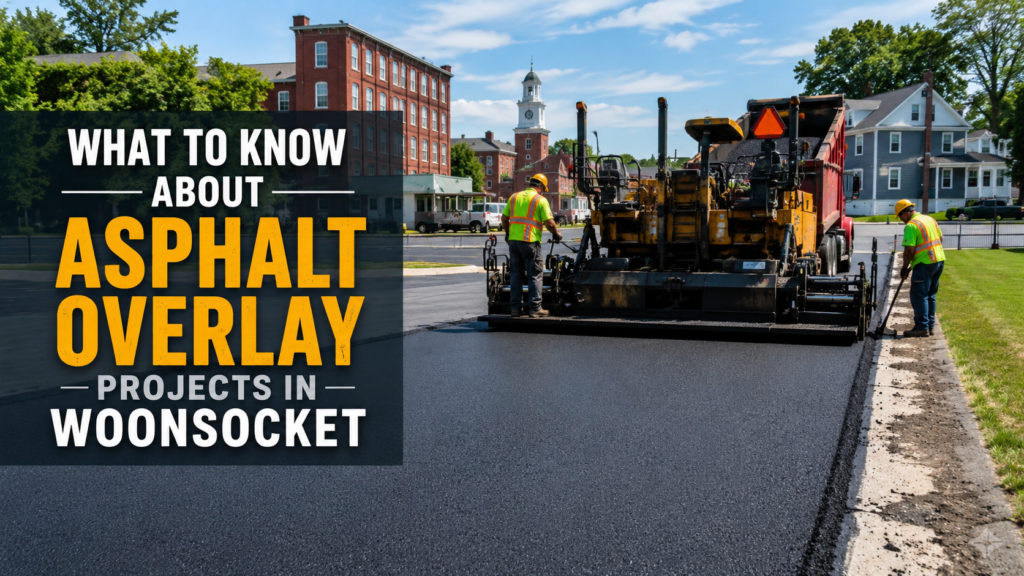
An Asphalt Overaly Woonsocket, sometimes referred to as resurfacing, involves applying a new layer of asphalt directly over an existing paved surface rather than removing the old pavement entirely and rebuilding from the ground up. This approach is often used when the underlying base of a driveway or parking lot remains structurally sound, but the surface layer has deteriorated from age, cracking, or general wear. Understanding when an overlay is appropriate, and when it isn’t, helps property owners in Woonsocket make informed decisions about pavement repair.
How an Overlay Differs From Full Repaving
The key distinction between an overlay and full repaving comes down to what happens to the existing pavement. In a full repaving project, the old asphalt is removed entirely, and in many cases the base beneath it is excavated and rebuilt before new asphalt is installed. An overlay, by contrast, leaves the existing pavement in place and adds a new layer of asphalt directly on top of it. This makes overlays generally a faster process than full reconstruction, since the excavation and base-rebuilding steps aren’t necessary. However, an overlay is only a suitable option when the existing base and underlying pavement are still structurally stable.
When an Overlay Is the Right Choice
Not every deteriorated parking lot or driveway is a good candidate for an overlay. Overlays tend to work well when:
- The existing asphalt has surface-level cracking, oxidation, or wear, but the base beneath it hasn’t failed
- Drainage across the site is functioning properly, without significant pooling or grading issues
- The existing pavement doesn’t have widespread alligator cracking, which typically indicates base failure
- The overall structure of the lot, including curbs and adjacent grading, can accommodate a slightly raised surface elevation
When an Overlay Isn’t the Right Fit
There are situations where an overlay, despite being a faster and less invasive process, isn’t the appropriate solution. These include cases where the existing pavement has widespread alligator cracking or visible base failure, since paving over compromised material typically results in the same problems reappearing in the new surface relatively quickly. Similarly, if a site has ongoing drainage issues that weren’t addressed in the original construction, an overlay won’t correct the underlying grading problem and may need to be paired with drainage improvements to be effective long-term.
The Overlay Installation Process
A typical overlay project follows these general steps:
- Surface preparation. The existing pavement is cleaned, and any significant cracks or potholes are repaired before the overlay is applied, to prevent those issues from reflecting through the new surface.
- Milling, if needed. In some cases, a thin layer of the existing asphalt surface is milled off to maintain proper elevation relative to curbs, drains, and adjacent structures, and to create a better bonding surface for the new layer.
- Tack coat application. A bonding agent is applied to the prepared surface to help the new asphalt adhere properly to the existing pavement.
- New asphalt application. A fresh layer of hot-mix asphalt is spread and compacted over the prepared surface, restoring a smooth, uniform finish.
- Striping and finishing. Once the surface has cured sufficiently, striping, signage, and any accessibility markings are reapplied.
Common Questions About Asphalt Overlays
How long does an asphalt overlay last?
When applied to a structurally sound base, an overlay can extend the usable life of a lot or driveway by many years, though the exact lifespan depends on traffic volume, climate exposure, and ongoing maintenance like sealcoating and crack sealing.
Can an overlay be applied more than once?
In some cases, yes, though each successive overlay raises the overall elevation of the pavement, which can eventually create issues with curb height, drainage grading, or clearance at building entrances. A paving professional can assess whether a site has room for an additional overlay or whether full reconstruction has become the more practical option.
How is it determined whether a lot needs an overlay or full replacement?
This typically starts with an assessment of the existing base condition. Signs of base failure, like widespread alligator cracking, significant sinking, or persistent potholes that keep reappearing, generally indicate that an overlay won’t provide a lasting fix and that more extensive reconstruction is needed instead.
Does an overlay address drainage problems?
An overlay can sometimes improve minor surface drainage by smoothing out small dips and imperfections, but it won’t correct significant grading issues rooted in the original construction. If drainage is a known problem, it’s worth discussing with a paving professional whether additional grading work should be incorporated into the overlay project.
How Long an Overlay Project Typically Takes
Compared to full reconstruction, overlay projects generally move through the installation phase more quickly, since the time-intensive steps of excavation and base rebuilding aren’t part of the process. Smaller driveways can often be completed within a single day, while larger commercial lots may take several days depending on size, weather conditions, and whether milling is part of the scope. As with any paving project, adequate curing time still needs to be factored in before the surface is ready for full vehicle traffic.
Overlay Thickness and Its Impact on the Finished Surface
The thickness of an overlay layer is determined based on the condition of the existing pavement and the anticipated traffic load going forward. A thicker overlay generally provides greater additional structural strength and a longer expected lifespan, but it also raises the finished elevation of the pavement more significantly, which needs to be weighed against clearance requirements at curbs, doorways, and drainage structures. Paving professionals typically calculate the appropriate overlay thickness by evaluating both the structural condition of the existing surface and how much elevation change the site can reasonably accommodate.
Why Base Condition Is the Deciding Factor
The single most important factor in determining whether an overlay is appropriate is the condition of the existing base. Because an overlay adds asphalt on top of what’s already there rather than replacing it, any underlying structural problems will eventually resurface, sometimes within just a year or two, if they aren’t addressed first. This is why a thorough assessment of the existing pavement, including checking for signs of base failure and drainage issues, is such an important first step before committing to an overlay project.
How Woonsocket’s Climate Factors Into Overlay Decisions
Rhode Island’s seasonal freeze-thaw cycles place ongoing stress on pavement, which means base integrity matters even more in this climate than it might in a milder region. A base that’s already showing signs of instability is likely to deteriorate further with each winter, making an overlay a short-term solution at best in those situations. Property owners in Woonsocket considering an overlay benefit from having their pavement’s base condition assessed with this seasonal stress in mind, rather than relying solely on the visible surface condition.
Benefits of an Overlay Beyond Speed
While the shorter timeline compared to full reconstruction is often the most obvious advantage of an overlay, there are several other benefits worth considering. Because the existing pavement stays in place, overlays generally generate less construction debris and disruption than a full removal and rebuild. They also allow property owners to refresh the appearance and smoothness of a lot without the more extensive site work that full reconstruction requires, which can be particularly valuable for busy commercial properties trying to minimize closures. Additionally, because much of the original structure remains intact, overlays can sometimes be scheduled with less lead time than a full reconstruction project, which often requires more extensive planning around excavation and base rebuilding.
Preparing a Property for Overlay Work
Even though an overlay is less invasive than full reconstruction, some preparation still improves the outcome. This typically includes repairing any significant cracks or potholes in the existing surface before the overlay is applied, since paving directly over unaddressed damage can allow those imperfections to reflect through the new layer relatively quickly. Property owners are also often asked to confirm the location of any utility access points, drainage grates, or other fixed elements that need to be accounted for when the new surface is brought up to the correct elevation. Clear communication about these details before work begins helps avoid surprises once the project is underway.
How Milling Fits Into the Overlay Process
On some projects, particularly where elevation relative to curbs or drains is a concern, a thin layer of the existing asphalt surface is milled away before the new overlay is applied. Milling accomplishes two things: it helps maintain proper clearance and drainage relative to fixed features like curbs and manhole covers, and it creates a rougher surface texture that helps the new asphalt bond more effectively to what’s underneath. Not every overlay project requires milling, but on sites where elevation is a tight constraint, it’s often an important step in ensuring the finished surface functions properly.
Making the Right Choice for Your Property
An asphalt overlay can be an efficient, cost-effective way to restore a worn but structurally sound paved surface, extending its usable life without the time and disruption of full reconstruction. The key to a successful overlay project lies in accurately assessing whether the existing base can support it. For property owners in Woonsocket weighing their options, understanding what asphalt overlay services in Woonsocket typically involve, and what conditions make an overlay appropriate, provides a solid foundation for evaluating a paving contractor’s recommendation.